THREADGuide the strand through the frame.
01CRAFT-LED DEVELOPMENT
OEM / ODM · BOBAI WICKER KNOWLEDGE
Craft knowledge,
made repeatable.
From the first strand to the approved sample, each crossing is shaped by material knowledge, controlled tension and a clear product brief.
DISCUSS A PRODUCT DIRECTION ↗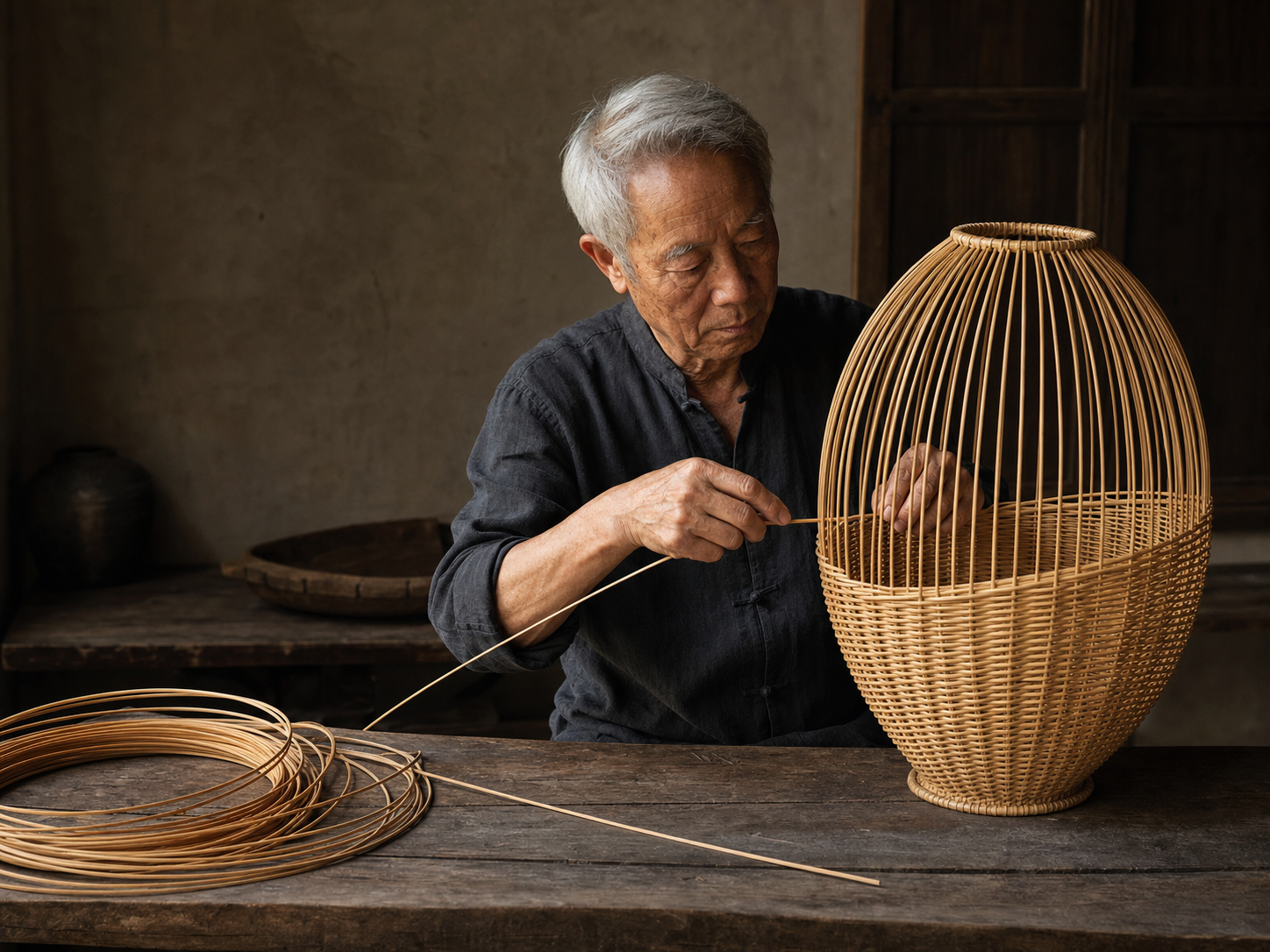
CROSSBuild an even over-under rhythm.
TIGHTENSet the line and hold its form.
DEVELOPMENT PRINCIPLE
Custom does not begin with decoration.
It begins with the customer, use, price position and shipment requirements.
Development can begin from drawings, photos or physical samples, but production needs more: dimensions, structure, materials, components, acceptable variation, packaging and quantity. WEIGE helps bring those layers into one development conversation.
Shanyan Gao, Founder & Business Director of WEIGE Wicker, leads buyer communication, product development and project coordination. WEIGE works directly with a family-operated manufacturing base in Bobai, Guangxi, connecting development decisions with practical manufacturing follow-through.
A target price is not required, but sharing the intended retail or wholesale position can lead to a more suitable construction direction.
01 — WHAT CAN CHANGE
One silhouette, many commercial decisions.
Customization and new product development can include size, color, material, weaving structure, accessories, logo, hangtags, packaging and private-label requirements. Scope depends on structure, material availability, quantity and target-market requirements.
Form & proportion
Overall size, opening, handle, leg, rim and visual balance.
Material & weave
Rattan or wicker, bamboo, natural grasses and fibers, paper rope, corn rope, metal or iron, wood, resin and glass—selected according to structure and project requirements.
Color & finish
Natural tone, stain, paint, coating and surface character.
Components
Frame, cable, hardware, lining, cushion and accessories.
Brand details
Logo, label, hangtag, care card, private-label requirements and retail presentation.
Packing
Nesting, protection, inner pack, carton and shipping marks.
02 — DEVELOPMENT JOURNEY
Five stages. Fewer hidden decisions.
A clear sample route protects both the creative direction and production reality.
Project brief
Reference, market, use, size, quantity and timing.
OUTPUT · DIRECTIONDevelopment review
Structure, material, component, feasibility and quotation review.
OUTPUT · PROPOSAL / QUOTATIONSample
Make, review, measure and refine the physical result.
OUTPUT · SAMPLEOrder details
Approve specification, packing, quality points and schedule.
OUTPUT · ORDER BASISProduction
Weave, inspect, protect, pack and coordinate shipment.
OUTPUT · GOODS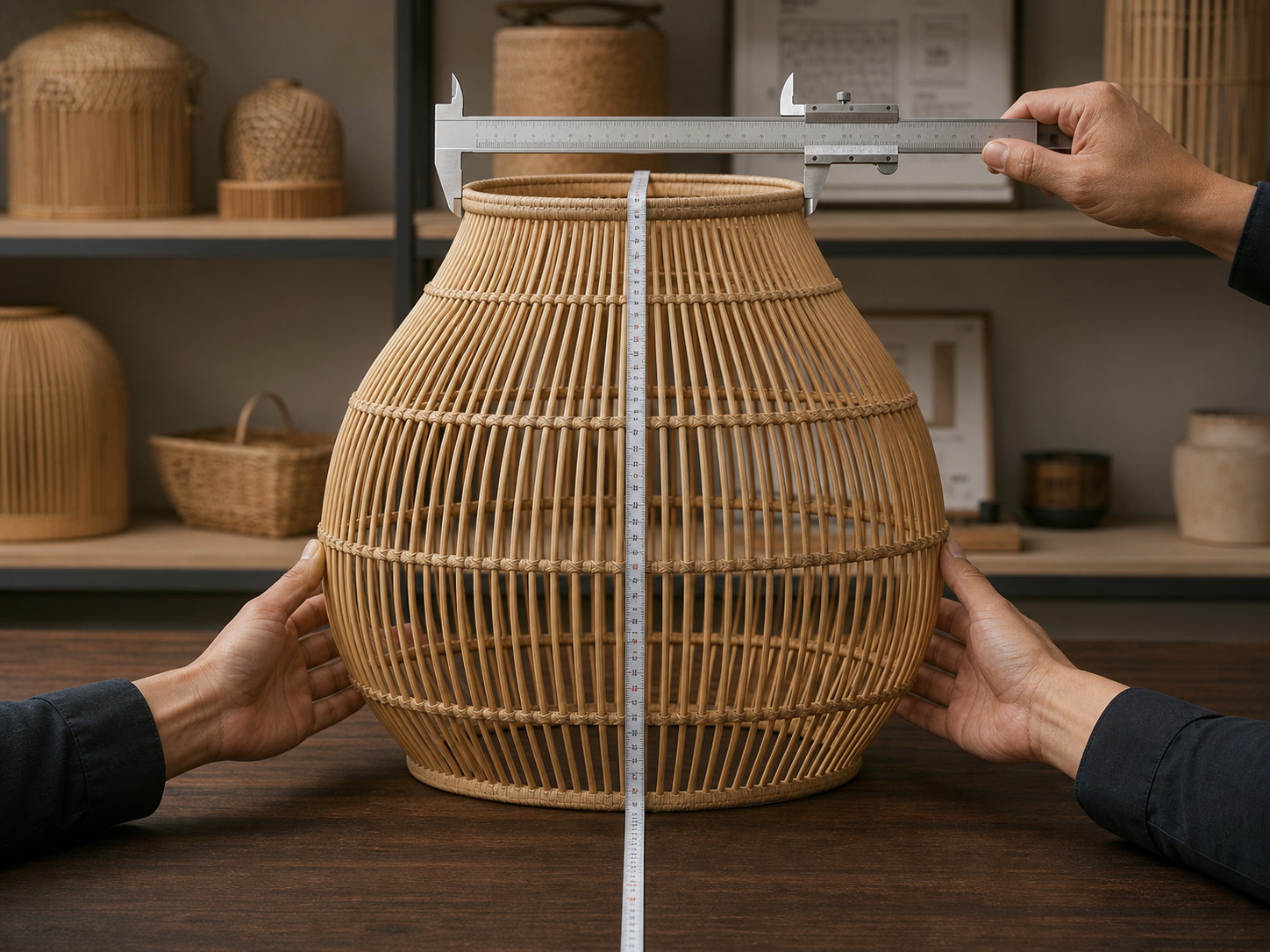
02SAMPLE DEVELOPMENT
A SAMPLE IS A DECISION TOOL
A useful sample
answers real questions.
Before production, one physical sample should make proportion, construction, finish and shipment details clear enough to review and approve.
Scale
Silhouette, opening and key dimensions.
Build
Frame, weave tension and fitting security.
Finish
Material tone, edge treatment and variation.
Shipment Readiness
Assembly, labels, packaging and loading touchpoints.
03 — COMMERCIAL REALITY
Why MOQ and price change by project.
MOQ and lead time are evaluated by project, considering product structure, order scale, material readiness, season, packing and loading requirements.
Mixed-style container planning can be discussed depending on the product combination. Sample approval normally comes before bulk-order confirmation.
Material purchase
Availability, grade, color direction and minimum material batches.
Structure & labor
Frame setup, weaving time, complexity and finishing steps.
Components & branding
Hardware, electrical parts, cushions, labels and printed items.
Packing & assortment
Carton construction, mixed SKUs, nesting and loading efficiency.
04 — WHO WE SUPPORT
A development model for different buyer realities.
Each channel needs a different balance of design, price, packaging and coordination.
01Home & lifestyle brands
02Wholesalers
03Retail & private label
04Hospitality projects
05Trading partners
REFERENCE · MARKET · QUANTITY